

B.C. budget forecast suggests sunnier days could be ahead
British Columbia appears to be on track for economic recovery, though conditions surrounding that remain uncertain due to the ongoing COVID-19 pandemic.
The provincial government released it’s first quarterly report on the 2021-22 Economic Outlook and Financial Forecast today (Sept. 13).
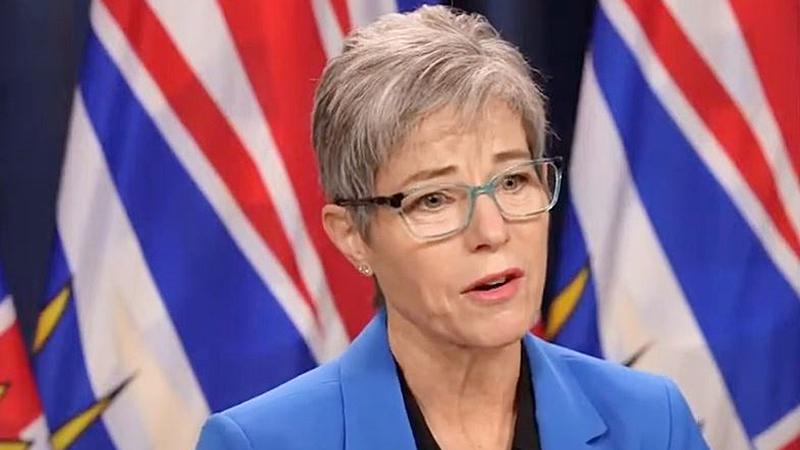
While presenting the report, Minister of Finance, Selena Robinson, noted that the figures are preliminary and while they show improvements, uncertainty remains, mainly around the impacts of the ongoing COVID-19 pandemic and the global response to that.
“Despite the progress we have made, there is still much risk and uncertainty related to our fiscal plan,” said Robinson.
“The recent increase in COVID-19 case numbers and changes to how we progress in the B.C. Restart Plan may impact our current and ongoing forecasts. We may see slower recovery than assumed in the economic forecast, and this is dependant on future outbreaks of COVID 19 in B.C., in Canada or globally, and delays in global vaccination rollout. It’s also dependent on stronger negative impacts to B.C. businesses and households as well as weaker global recovery, particularly among B.C.’s major trading partners.”
Despite those potential complications, the current figures from the province suggest a 6.3 per cent growth in the real Gross Domestic Product (GDP) in 2021, which is up from the projected 4.4 per cent in Budget 2021.
“B.C.’s economic recovery has been supported by the reopening of the economy and easing of restrictions following rising vaccination rates among the ongoing government emergency response program,” said Robinson, adding the vaccination rate remains a contributor to the economic path, and encourages people to get their shots so further health restrictions won’t be enacted or expanded, potentially leading to negative economic impacts.
Following the 6.3 per cent growth this year, Robinson says B.C’s real GDP is expected to rise by 4.3 per cent in 2022, which is better than the national average and will be the third strongest in the country. Robinson noted these projections were taken from data recorded on August 6, 2021, but since then Statistics Canada has released more data suggesting a contraction in the Canadian economy in the second quarter of 2021.
“This was unexpected and will likely result in the reduction of the full year forecast for Canada. We’ve already seen some forecasters revise their projections. For example, BMO has revised their 2021 outlook for Canadian real GDP to 5 per cent, down from six per cent previously,” said Robinson.
“However, BMO’s revised projection is still calling for strong growth for the full year, despite the unanticipated contraction. This is because the economy is still performing much better compared to last year.”
The minister said the downward pressure this will put on B.C. will be less than other provinces, as previous export weaknesses were mainly focused on the manufacturing side of the automotive sector, which are mainly concentrated in Ontario and Quebec. Robinson also stated that the slowdown in home sales, which was responsible for the national GDP decline, has already been factored into the report released Monday.
The Stats Can report, along with any other data releases, will be factored into the projections at the next fiscal update.
The year-end deficit is projected to be $4.8-billion, which is roughly half of the $9.7-billion deficit prediction from Budget 2021.
That improvement is mostly attributed to strong economic recovery in a number of sectors, which are leading to higher than expect revenues. The province said there was an overall increase of $6.2-billion in provincial revenues compared to Budget 2021, and that revenues will be upwards of $65.1-billion in the 2021-22 fiscal year.
Robinson noted employment has returned to near pre-pandemic levels, and that unemployment has been on the decline.
“However, some service industries that were heavily impacted by social distancing and travel restrictions continue to struggle to gain back their job loses, such as accommodation, food services, wholesale and retail trade, and transportation and warehousing. And while B.C.’s long term unemployment has been trending down in recent months, the share of unemployed people who have been out of work for 27 weeks or more is still much higher than it was before the pandemic.”
She said consumer spending on goods has been resilient, pointing to retail sales, which were up 13 per cent in June 2021 compared to February 2020. Sales at grocery stores, electronic stores and gardening and construction stores have been robust during the pandemic, while sales of motor vehicles and parts have seen significant gains so far this year.
B.C.’s international goods exports were also up compared to pre-pandemic levels as of July 2021.
The debt-to-GDP ratio is also forecasted to be 19.6 per cent, which is lower than the 22.8 per cent outlined in Budget 2021. The tax-supported debt to revenue ratio is also down to 103.8 per cent in the forecast from the 125.9 per cent in the budget.
“B.C.’s debt-to-GDP ratio is significantly lower than some provinces, for example Ontario and Quebec have ratios that are above 40 per cent, and we are comparable to Alberta and Saskatchewan at this time,” said Robinson.
She adds that while the debt level is higher than it has been in recent years, the province is still able to borrow at low interest rates of around 3 per cent, and from an operational perspective, the province is at a good position to afford the interest costs.
While revenue projections show an improvement of $6.2-billion, which includes a $4-billion improvement in taxation revenue, that has been offset slightly by higher expenses, mainly due to the COVID-19 pandemic, wildfires that raged across the province and spending on the delivery of key services.
The updated forecast for the pandemic recovery remains as previously budgeted at $3.25-billion. That figure sees previously supported measures remain funded, though some will lose a portion of their funding to help implement a new $325-million COVID-19 Paid Sick Leave program not previously included in Budget 2021.
The province’s figures also show a capital investment cost projection of $12.8-billion in 2021-22, which is $701-million less than previously budgeted. Robinson said this decrease is mainly due to project scheduling for transportation projects and timing changes in capital spending for post-secondary facilities.
The economic outlook also suggests the provincial, national and global economic activity will return to near pre-pandemic levels over the next year, and Robinson said the assumption of large-scale global vaccination campaigns will lead to the recovery of economic activity and the easing of travel restrictions around the world.
“The timing of the recovery, of course, will vary by the jurisdiction and by industry. High contact service industry such as tourism, hospitality, entertainment and recreation are anticipated to take a little longer to rebound relative to other industries,” said Robinson.
Robinson added while the positive news of employment rates being above pre-pandemic levels and sectors re-opening and staying open across the province are reasons for optimism, things can change quickly due to the COVID-19 situation, and again urges people to get vaccinated so the government doesn’t need to respond to further health crises, negatively impacting the economy, businesses and individuals in the process.
“Our priority from the beginning [of the pandemic] has been supporting the people of the province , and that remains true now, and going forward,” said Robinson.
More details of the province’s Economic Recovery Plan is expected to be released this fall, and the Second Quarterly Report will be released later in the year.
The Opppositon Liberal said the Quarterly Report revealed the NDP government’s continued failure to effectively roll out support programs and underlines the need for a comprehensive plan to create jobs and grow the economy.
“The update given by the Finance Minister today shows that the majority of the NDP’s supports have failed to effectively make it out the door and into the hands of employers, workers and families,” said Mike Bernier, BC Liberal Critic for Finance. “Only 10 per cent of the Increased Employment Incentive Tax Credit has been paid out and nearly a million people who were eligible for the BC Recovery Benefit could not claim it, despite there being no shortage of people and businesses in need.
Bernier said also said not a single NDP business grant program had been more than 50 per cent paid out as of June this year.
“With problems like the growing labour shortage, debt, and other pressures caused by the fourth wave of COVID-19 facing the province, this is simply unacceptable. It’s clearer than ever that B.C. needs a real economic plan. One that creates jobs, grows the economy, brings the budget back in balance and ensures that support is actually provided to those in need,” Bernier remarked.