

Province to raise minimum wage to $15.65 this June
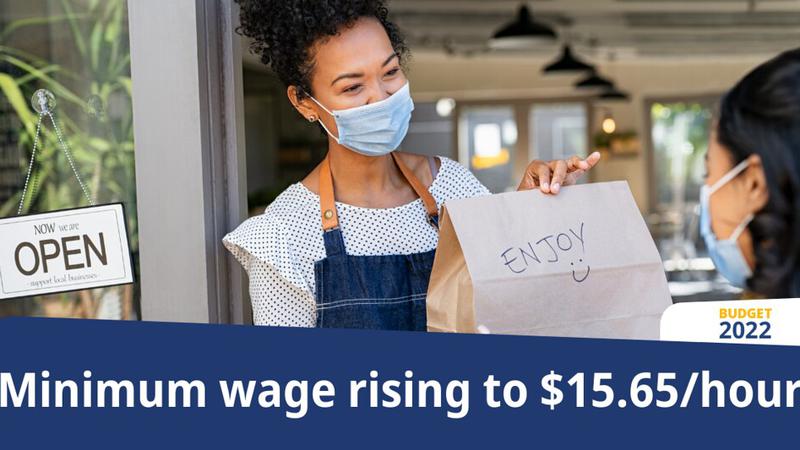
British Columbia workers who make minimum wage will be getting a pay raise in a few months.
Labour Minister Harry Bains has announced that, effective June 1, 2022, the general minimum wage will increase by 45 cents an hour to $15.65.
The increase is based on B.C.’s annual inflation rate in 2021, which was 2.8 per cent for the year, the highest since 1993.
The alternate minimum wages will also rise by 2.8 per cent on June 1 for daily or monthly rates for live-in camp leaders, live-in home support and resident caretaker workers.
“As well the minimum agriculture piece rates for workers who hand harvest certain crops will increase by 2.8 per cent on Jan. 1, 2023. The date for increases in piece rates was selected so it doesn’t interfere with the harvest season,” Bains explained.
The province said that in 2021 six per cent of employees in B.C. (136,300) earned minimum wage or less, and also in 2021, 52 per cent of employees earning minimum wage or less were over the age of 25 and 58 per cent were women.
Under the NDP government, B.C.’s minimum wage has gone from $11.35 in 2017 to 15.20 as of last June.
“These increases are part of our plan to build an inclusive and sustainable economy and have helped over 400,000 workers since 2017. B.C. now has the highest minimum wage of all provinces in Canada,” Bains stated at a news conference.
The minster said the wage hike particularly helps the lowest paid and most vulnerable workers.
“Many of whom have worked tirelessly during the pandemic and kept our grocery stores open and kept our supply chain moving,” he remarked.
Bains was asked about the impact the raise will have on the bottom line to small businesses.
“We certainly are aware that the businesses are struggling during the pandemic, and that is why the B.C. government provided the most support to the businesses on a per capita basis than any other jurisdiction in Canada,” Bains stated.
The minister said the increase does provide certainty which businesses had asked for in consultations.
“Having a gradual, predictable increase provides them with certainty so that they can plan,” the minister added.