

Okanagan College among institutions to undergo funding review
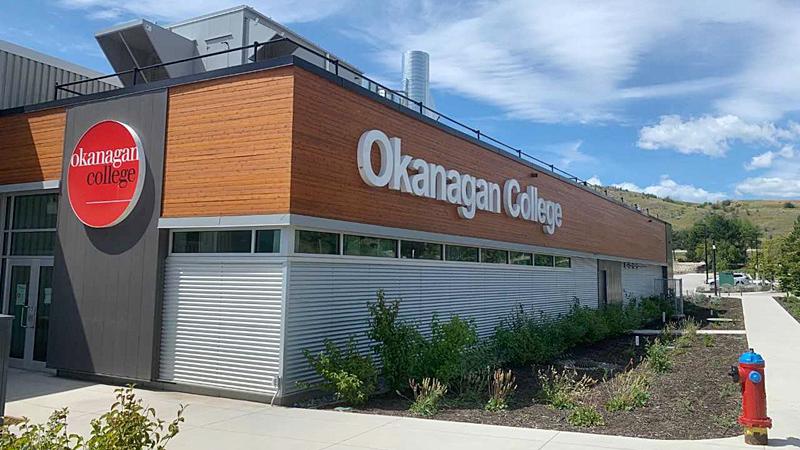
The B.C. Government is launching a review of how it funds the 25 public post-secondary institutions in the province, including Okanagan College.
The sector-wide review is intended to ensure the institutions have the necessary resources to support economic recovery and student success.
The current funding model has not been updated in over 20 years, which the province said has created constraints and inequities for some of the public post-secondary institutions.
The review will help the province develop an updated, modern funding model with three key goals.
- Establish a funding model that fairly and impartially distributes provincial financial resources across the sector.
- Align provincial funding with the education and skills training needs of British Columbians and the communities served by the 25 public post-secondary institutions.
- Support student success by ensuring access to affordable, high-quality post-secondary education and expanding key student supports.
To accomplish these three main objectives, the province has eight key principles to follow during the review process.
- Align with B.C.’s priorities: Ensure the post-secondary system serves the needs of all learners while aligning with the values and priorities of British Columbians.
- Lasting and meaningful reconciliation: Ensure action on reconciliation and implementation of the Declaration on the Rights of Indigenous Peoples Act and success of Indigenous learners.
- Transparency: Establish transparency in how public post-secondary institution block grants are determined
- Adaptability: Establish an adaptable formula while maintaining financial stability for public post-secondary institutions.
- Stability and predictability: Provide stable and predictable funding for long-term planning.
- Improve performance output : Solve regional access and funding distribution issues to help improve student success across the province.
- Recognize research and non-government revenue: Encourage innovative research and recognize non-government revenue opportunities that exist for institutions.
- Incentivize collaboration: Incentivize public post-secondary institutions collaboration for seamless student pathways and success.
The review will focus only on block funding for general operations, which represents approximately 75 per cent of government operating grants. Block funding is currently based on the previous year’s grants and is not linked to specific programs or student seats.
Targeted funding, which represents the remaining operating grants for high-demand occupations such as health and technology, is not within the scope of this review.
The first phase of the review will begin with engagement with key sector partners, students, labour and sector associations, and public post-secondary institutions. Those include student associations; faculty associations; sector associations; industry and employer organizations; and the institutions themselves.
The 25 public post-secondary institutions in B.C. consist of:
- British Columbia Institute of Technology
- Camosun College
- Capilano University
- Coast Mountain College
- College of New Caledonia
- College of the Rockies
- Douglas College
- Emily Carr University of Art & Design
- Kwantlen Polytechnic University
- Justice Institute of British Columbia
- Langara College
- Nicola Valley Institute of Technology
- North Island College
- Northern Lights College
- Okanagan College
- Royal Roads University
- Selkirk College
- Thompson Rivers University
- University of British Columbia
- University of the Fraser Valley
- University of Northern British Columbia
- University of Victoria
- Vancouver Community College
- Vancouver Island University
A process for engaging with Indigenous People will be co-developed with Indigenous partners, which could include, but not be limited to, the First Nations Leadership Council, B.C. Assembly of First Nations, First Nations Education Steering Committee, and the Indigenous Adult and Higher Learning Association.
The engagement will be led by Don Wright, who holds a bachelor of commerce from the University of Saskatchewan, a master of economics from the University of British Columbia, and a doctor of philosophy in economics from Harvard University. He has also served as the deputy minister to the premier, cabinet secretary and head of public service, and was the secretary to the treasury board and deputy minister in the governments of Saskatchewan and B.C. in the ministries of forests, trade and investments, and education.
Wright will provide a final report of key findings from the engagement process to government for consideration by the summer of 2021. The findings from the engagement sessions will also be made public.
Following that step, the province will launch the second phase, led by the Ministry of Advanced Education and Skills Training with support from Wright and Dan Perrin, a public policy professional who has actively provided public policy advise in British Columbia since 1981. The second phase will see policy options be developed and help inform the design of an updated, modern funding model.