

Fire risk remains high in the Interior
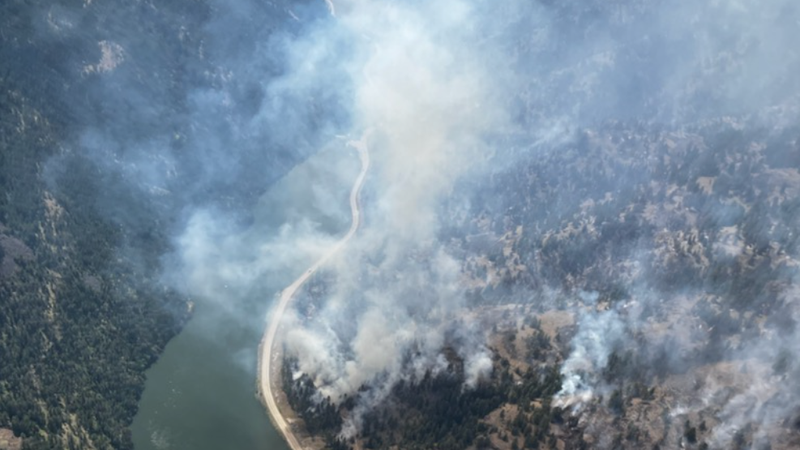
Provincial fire officials say conditions point to an increased risk of wildfires in the Interior this month.
British Columbia, and the Interior in particular, saw hotter than usual temperatures and dryer than average conditions in July, mainly due to a upper ridge pressure system.
“That [system] was what was associated with the hot, dry spell, and that ridge of high pressure took hold and delivered some of the hottest conditions we’ve seen yet this season,” said the B.C. Wildfire Service’s Neal McLoughlin during the August wildfire update.
“That prolonged hot, dry spell steadily cured our fuels, and it increased our fire danger across the province.”
In addition to the prolonged hot, dry conditions, the weather system brings more concerns when it breaks down, because it then typically creates thunderstorms.
“That’s indeed what we saw. Over 35,000 lightning strikes were recorded during the last week of July in the southern and northeast portions of B.C.,” said McLoughlin.
“As a result, we had 121 new fire starts in that period, 74 per cent of them were lightning caused.”
The ridge breakdown also typically creates strong, gusting winds, which is another cause for concern in these conditions.
“As those winds aligned with terrain, it resulted in fast-spreading fires and aggressive behaviour that was challenging to fight fires in.”
Parts of the province, especially the northern and coastal areas, have seen precipitation over the past week, but the Interior has not seen much and is not expecting significant rainfall in the coming week, meaning the area’s fire danger risk will remain high.
Looking ahead to August, much of the province has normal to below-normal drought conditions, however, in the Interior there are localized areas where conditions are above normal, and there are also high fuel build-ups in the Interior.
Above seasonal temperatures are forecasted through August and into September, and around normal precipitation levels are expected throughout B.C. during that time, although it was noted that long-range precipitation forecasts are not entirely reliable.
Based on past years with similar fire trends and conditions, including 2020 and 2011, the province does expect fire activity to increase in August.
“In the past week, we’ve seen about 149 new fire starts, and we would expect a similar number of fire starts through the month of August,” said McLoughlin .
The large fires that started in late-July, including the Keremeos Creek and Nohomin Creek wildfires, are expected to continue to burn in August, but the growth isn’t expected to be too widespread as intermittent periods of cooler temperatures and wetter weather hits in the province have helped with the suppression efforts by the wildfire crews.
Though there is a risk of increased fire activity, the province has had a relatively calm wildfire season compared to other years.
To date, 528 wildfires have burned a total of roughly 22,000 hectares.
Comparatively, at this time in 2021, the province had lost 570,784 hectares to fires, and the 20-year average is 113,978 hectares burned.
There are approximately 1,000 B.C. Wildifre Service firefighters and personnel, five incident management teams, and 110 helicopters and planes deployed throughout B.C.
As of Aug. 4, there are still approximately 326 properties under evacuation orders and another 500 on evacuation alerts. However, the province noted that, at the same time last year, there were over 4,300 properties under evacuation orders and another 21,000 on alert.
Though it has been a relatively calm fire season, the province still encourages people to take actions to protect their properties through FireSmart activities, to have go-bags prepared and available in case a fire does spark and force an evacuation, and to not take part in risky activities that could lead to a wildfire.