COVID-19 cases in school age children trending down in B.C.
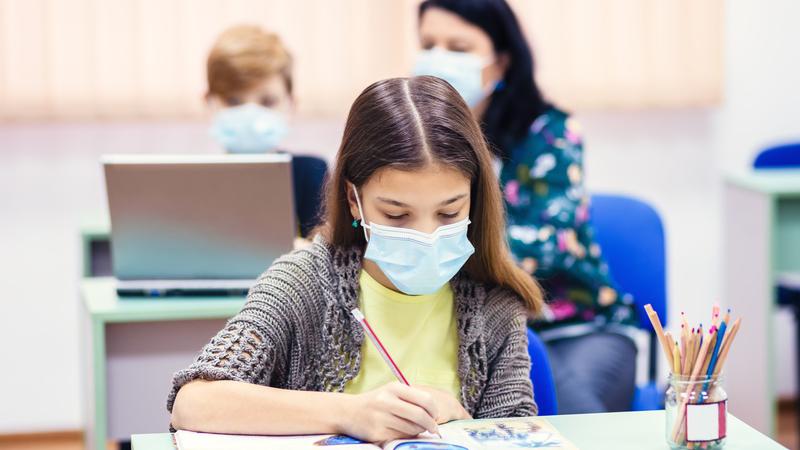
Following big spikes in COVID-19 cases at the start of the school year, the case rates for school age children have started to trend back down.
Data presented by Dr. Bonnie Henry Tuesday showed most age groups saw increased case rates in September, especially in those in the five to eight and nine to 11 age groups. However, since the start of October those figures have been trending downward in all age groups, with the biggest gains made by those same groups that saw the biggest spike.
Henry said the case rates don’t necessarily reflect the implementation of the mask mandate for younger children, as the mask requirement was implemented in June for nine year olds and above, and the fluctuation in case rates from that time were similar to those noted in the first five weeks of the school year.
“I do believe masks are important, I’ve said that many times in certain environments, and yes, it’s important, particularly when you’re moving around people, outside the classroom, etcetera,” said Henry.
“So it is one of the important tools, but it does tell us that the other measures we have in place are also important in the schools. If we look at the rates in the adults in the schools and the 12 to 17 year olds in the school system, again we see that there’s less transmission the more that young people and staff are immunized.”
The provincial data also showed that severe illness and COVID related hospitalizations in B.C. children remain very low.
“We have seen very few children admitted to hospital, thankfully. In the past week we have had five new admissions in the zero to four age group, one in the five to 11 age group, and one person 12 to 17 who were admitted to hospital,” said Henry.
“There were no admissions in the school age children to the [intensive care units] in the past week. So that’s important for us to watch as well.”
She added that daily hospitalization rates for 12 to 17 year olds between Sept. 8 and Oct. 7 who have had one or both vaccinations is zero per one million, while the daily hospitalization rate unvaccinated youth during that same time frame was three per one million.
Henry also noted that Interior Health has had 80 ‘COVID-19 clusters’ in school settings, which involve two or more cases reported within a short period of time, and is the highest number in any of B.C.’s health regions.
Those clusters resulted in 314 cases in the first five weeks of the school year, which accounted for about 28 per cent of all cases reported in the Interior during that period of time.
Henry noted that an important factor the province is looking at is the number of transmissions from these clusters, and comparing it to the figures from last year.
“On average we had a median of people involved in a cluster which was one or two last year, and we are seeing a slight increase this year where the median number is three,” said Henry, adding that the current figure is still considered small and that less than one third of all B.C. schools have had a cluster.
Henry added that about a third of B.C. schools have been home to clusters, which is about the same recorded in the same period last year.
She also stated that the source of infection for school age children is largely coming from outside the school settings, and work is underway to deliver information quickly and effectively to families in the event of transmission.
“I will say again that we know that it takes time to do those case investigations, and that parents are often the first to know if their child is ill,” said Henry.
“So we need to work together to make sure we’re all taking those precautions so we can keep our schools active and functioning and all the important things for children in the school system this year.”
Henry also noted that with Pfizer having applied for approval to administer COVID-19 vaccines for children as young as five years old, a recent poll of B.C. parents showed about half of respondents very much want to have their children immunized, and should approval be granted, regional health authorities will be in charge of rolling out those vaccines and getting those jabs into kids’ arms.