

B.C. announces more ambitious climate plan
The plan to combat climate change has become even more urgent for the British Columbia government.
With that in mind, the province has launched what it describes as a stronger, more ambitious climate plan to deliver on its commitment to reduce climate pollution and build a cleaner, stronger economy by 2030.
Premier John Horgan said the CleanBC Roadmap to 2030 accelerates measures in the climate plan and introduces new ideas to help B.C. achieve the Paris emissions reduction targets for 2030 and reach net-zero by 2050.
Horgan said given the increasing extreme weather events and wildfires, all British Columbians and Canadians are focused on making progress on climate change now.
“Not sometime in the future, but right now. The threat is no longer decades away. It is here with us in everything that we do,” Horgan told a news conference.
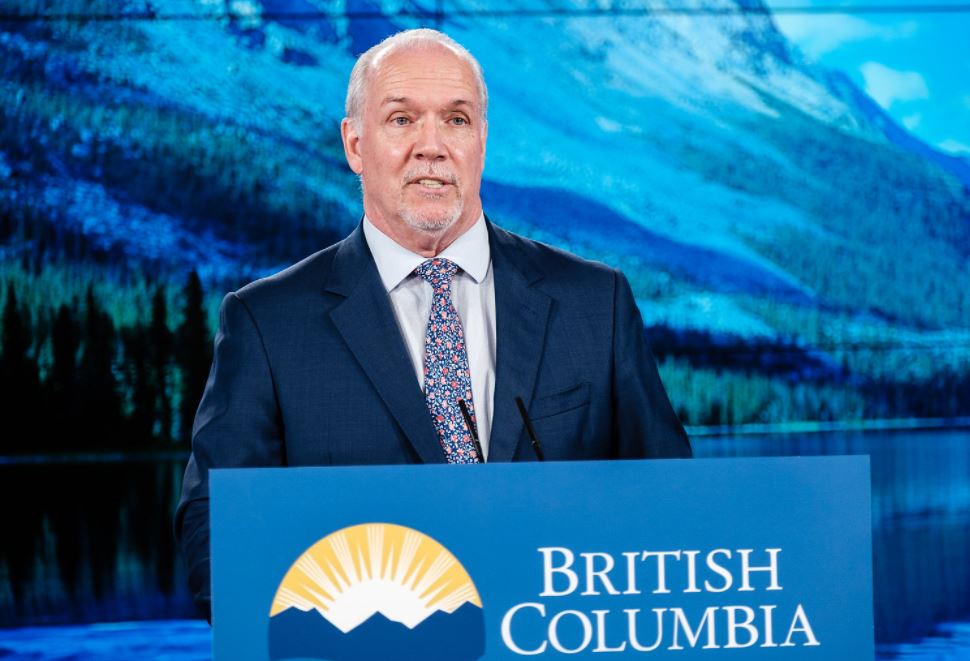 Premier John Horgan (Photo credit: Province of B.C.)
Horgan was asked what differences the changes will make for residents by 2030.
“I’m hopeful they’re going to have cleaner air to breathe and there will be fewer fires. They will have access to different transportation options that are either zero-emitting or heading in that direction,” the premier commented.
However, Horgan noted B.C. is “5.2 million souls in a sea of seven billion people” and governments around the globe will have to make extraordinary efforts to be successful on climate change.
The new plan builds on the one B.C. has been working under since 2018 by making polluting more expensive and the shift from fossil fuels to clean alternatives more affordable. Horgan said the plan will help power more businesses and communities with clean, renewable made-in-B.C. hydro electricity. Working with large industry partners, it will also ensure sector-specific plans to reduce their climate pollution and meet B.C.’s targets.
 (Image credit: Province of B.C.)
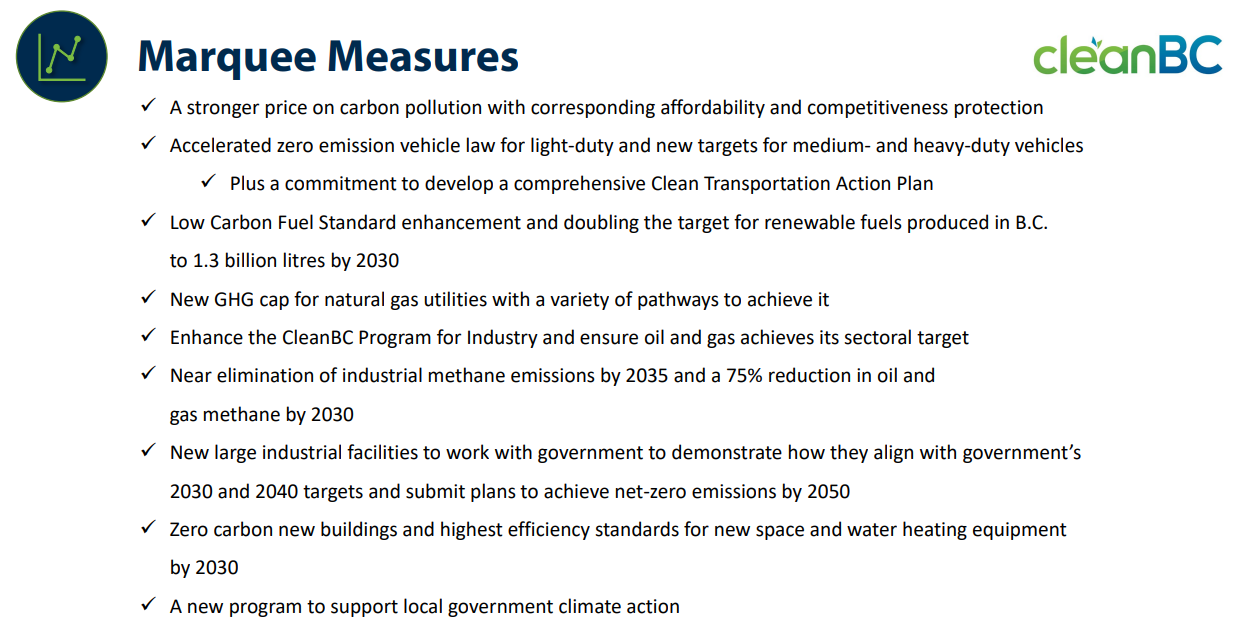
The CleanBC Roadmap to 2030 includes a series of actions across eight pathways. They include:
- a commitment to increase the price on carbon pollution to meet or exceed the federal benchmark, with supports for people and businesses;
- requirements for new industry projects to have enforceable plans to reach B.C.’s legislated and sectoral targets and net zero by 2050;
- stronger regulations that will nearly eliminate industrial methane emissions by 2035;
- a comprehensive review of the oil and gas royalty system to ensure it aligns with B.C.’s climate goals and provides a fair return for British Columbians, with outcomes released in February 2022;
- new requirements to make all new buildings zero-carbon by 2030;
- a nation-leading adoption of zero-emission vehicles (ZEVs) by 2030 and 100% ZEVs by 2035;
- developing new ZEV targets for medium- and heavy-duty vehicles;
- an accelerated shift toward active transportation and public transit (30% by 2030; 40% by 2040; 50% by 2050);
- increased clean fuel and energy efficiency requirements; and
- support for innovation in areas like clean hydrogen, the forest-based bioeconomy and negative emissions technology.
“By working with all sectors, we can see clearly where we are making progress and where new thinking and resources are required,” said George Heyman, Minister of Environment and Climate Change Strategy. “The CleanBC Roadmap puts greater focus on transitioning away from fossil fuels faster and adopting clean energy solutions. It strengthens B.C.’s position to attract investment and build opportunity for British Columbians and embodies our determination and commitment to meet our climate targets.”
“We made our oil and gas sectoral targets clear a year ago and this roadmap includes our commitments to meet that reduction target. We will work with experts, industry and Indigenous Nations on programs and policies that will achieve this, including regulation where necessary,” Heyman said.
To read the CleanBC Roadmap to 2030, visit: www.cleanbc.gov.bc.ca