

Dr. Henry hopes to relax restrictions by mid-February
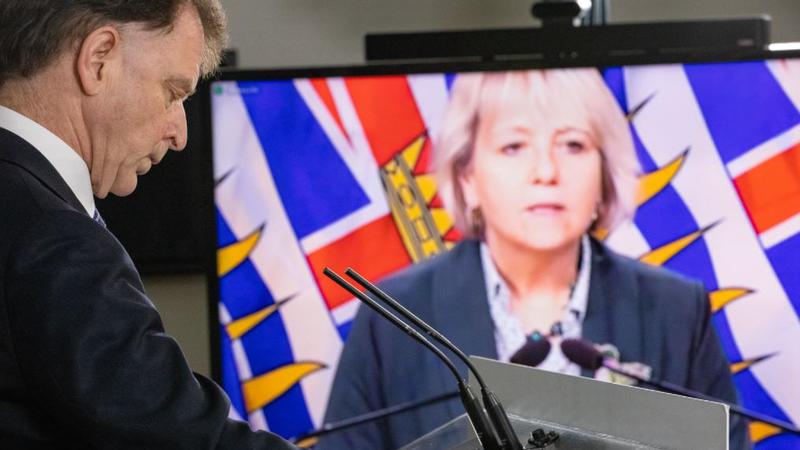
Today marks the second anniversary of when the first case of COVID-19 surfaced in British Columbia.
“That was the start of our pandemic, and since that time, every single one of us in B.C and around the world have been impacted,” provincial health officer Dr. Bonnie Henry told a news conference on Friday, the 276th COVID briefing given by the B.C. government during the pandemic.

(Image credit: Province of B.C.)
Since then, there have been five waves of the virus and its variants, over 314,000 cases in B.C., and 2,554 COVID-related deaths.
Henry said over the last two years, we have found out how connected we are.
“We are connected to the people in the community that we may not have recognized; whether that is the person working in our grocery store, the person collecting garbage, health care workers, our teachers. And we are connected globally,” Henry said.
Henry said Dec. 15, 2020 was “one of the most important dates” in the recovery from COVID, when the first vaccine was given in B.C., just days after the vaccines were approved for use in Canada.
“That was a very positive and optimistic day, and I can’t say how many times I’ve have seen the happy faces of people getting their vaccine; the relief, the optimism that that brought with it,” Henry remarked.

(Image credit: Province of B.C.)
As for the future, Henry predicted “likely many more variants to come,” and the province has needed to reset its control strategies due to the changing nature of the virus.
“Contact tracing is not something that wo0rks with this degree of spread and it’s not possible to test everyone, so we need to focus our testing on those people that need it most,” said the province’s top doctor.
Henry said the actions going forward include getting booster shots, getting children vaccinated, staying home when sick, wearing masks, and to keep groups small, at least until the Omicron wave subsides.
“As we move through this phase, the extraordinary measures will change, and we’re looking now towards the middle of February, and Family Day, when we can start to get back to doing more things again.”
Henry said the current orders will be reviewed and updated on Feb. 15.
“If we are continuing on this trajectory, then yes, I do hope that we will be able to lift some of those restrictions and gradually get back to those needed connections that we have.”
Health Minister Adrian Dix used the two year anniversary to thank all the health care teams around the province for their efforts with not only the pandemic, but with the overdose crisis that has been ongoing since 2016.
“I think our teams have been exceptional and I am honoured to work alongside them as we deal with these two public health emergencies, and all the other challenges facing our health care system,” Dix said.
The National Advisory Committee on Immunization is now recommending COVID-19 booster shots for teens (12-17) with underlying health conditions and those who are at high-risk of COVID exposure. It comes as data shows the high rate of infection due to Omicron has resulted in more kids being admitted to hospital.
Dr. Henry said B.C. is discussing that recommendation and she expects more details at her next update on Tuesday, Feb. 1.
Meantime, Canada’s chief public health officer said today the data and other indicators continue to show the Omicron wave of the pandemic is starting to wane.
Dr. Theresa Tam said it’s too early to decide if COVID-19 is shifting into endemic status, where it would be considered a virus that is constantly present in an area, usually with mostly mild impacts, such as flu.
But Tam said she is cautiously optimistic we’re getting close to that point.