

Expert gives advice on encounters with bears & cougars
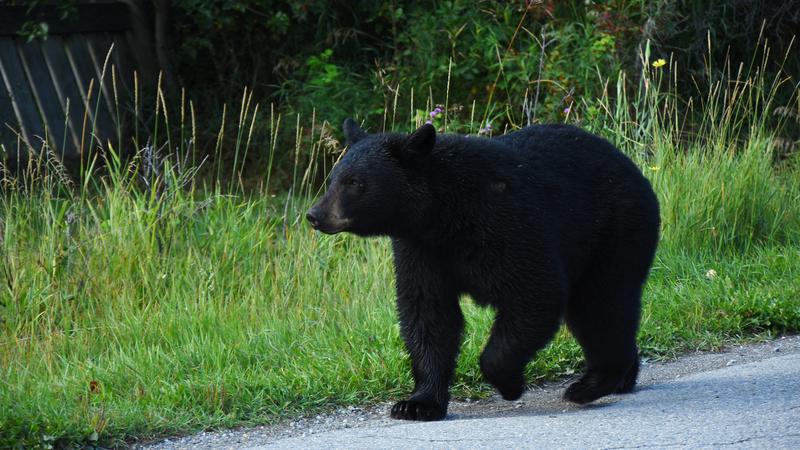
North Okanagan residents are asked to be bear aware over the long weekend and into the summer.
Bears are no longer hibernating and there has been a number of sightings in the Vernon, Coldstream and North Okanagan areas over the past few weeks.
With bears becoming more visible, and as the North Okanagan is bear country, Vanessa Isnardy, the program coordinator for WildSafe B.C., told Vernon Matters that people should take action to prevent conflicts with bears.
“Bears right now are seeking to find lush hedges and grasses that are protein-rich and get their digestive systems going. They might also take advantage of winter-killed ungulates, as the carrion is a protein source as well,” said Isnardy.
“So it’s important at this time of year just to be aware as you’re going out hiking and recreating in bear country. Make noise with your voice, keep your pets on a leash, be aware of your surroundings, look for fresh bear scat that might be on a trail, and we do recommend carrying bear spray when recreating in the back country because there’s lots of bears active right now.”
In the event of coming in contact with a bear in the wilderness, Isnardy said the most important thing a person should do is not run.
“You don’t want to give a chase response in any wild animal. They’re much faster than we are and we don’t want to give them a reason to think that we’re potential prey,” said Isnardy.
“So if you see bear, generally 80 per cent of their diet is plant-based and they’re typically not that interested in us; they’re interested in other easier food awards. So what we need to do is stay calm and back away slowly and just give that bear lots of space. That’s the safest thing we can do and that’s what we should teach our children to do; not to run, but to stay calm, back away and seek shelter at a nearby building or house or school.”
She added that in the event a bear does approach someone, they should identify whether the animal is simply just using the same path or is intently coming forward.
“If a bear’s intently coming towards you, this is a very rare situation. Very, very rare, but if it does, it could be a predatory bear so this is when you want to ramp up your game. You want to be a little bit more aggressive and assertive and tell that bear not to approach and make loud noises,” said Isnardy.
“Clap your hands, make yourself look big. You want to make sure the bear is not interested in you as a potential food source, so that’s when you get more aggressive.”
Along with being aware of bears in the wild, people can take steps to avoid having bears come onto their properties.
“The easiest thing we can do is secure all of our attractants. That includes any organics that are in our garbage or our compost; that includes bird seed because bird seed has over 8,000 calories [per kilogram] so it’s a really attractive food source and it’s important to keep out of reach,” said Isnardy.
“And just because you’ve never had a bear to your property, doesn’t mean you aren’t going to have a bear come visit you in the future, so don’t let your property be the first one that a bear encounters and learns it can get an easy reward.”
Isnardy adds that people can also remove other potential food sources, such as pet food, barbecue grease traps, and fruit from trees, to remove any incentives for a bear to enter a property.
She added that once a bear learns where a food source can be found, it will likely return to the scene, setting the bear onto a path that will lead to a conflict with people.
Along with looking out for bears, people should be on the lookout for cougars and rattlesnakes this summer.
RELATED NEWS: Summer activities bring risk of rattlesnake encounters
Isnardy noted that cougar interactions can occur anytime of year, as they do not hibernate like bears or hide away in their dens like snakes do in the winter.
She said cougars typically hunt deer, though in the rare instance they stalk a human they will look for smaller targets like pets or children, and encourages people walk their kids to and from schools and activities in the event of a cougar sighting.
As with coming in contact with a bear, people who come face to face with a cougar should not run but instead make themselves look big and be loud to try to scare the big cat away while backing away slowly.
Isnardy also noted that cougars will leave their kills and return to that site over the course of several days.
“If people do encounter a cougar kill site, they should report it [to the B.C. Conservation Officer Service] so that proper precautions in that area can be closed off because that cougar may return several times and be very protective of the kill.”
Isnardy added that people should keep their dogs on a leash while walking in the wilderness to avoid the risk of the pet being confronted by a wild animal.
WildSafe B.C. has a number of educational tools online for people to learn how to deal with coming in contact with a wild animal.
People should be prepared to spot a wild animal in the wilderness, but Isnardy said wild animals spotted in residential areas and conflicts between a person or pet and a wild animal should be reported to the B.C. Conservation Officer Service at 1-877-952-7277.