

B.C.’s top doc recommends using masks, but no mandate
British Columbia’s Provincial Health Officer will not re-issue a mask mandate at this point.
With the respiratory illness season upon the province, Dr. Bonnie Henry said people should take action to prevent the spread of viruses, but fell short of issuing any new orders.
“We are all human, and masks are protective equipment, but they’re only as effective as we make them, and that can be a challenge, especially for children sometimes. And I do not believe we need that heavy hand of a mandate to send a clear message that masks are an important tool that we can all use during this time and in every respiratory season,” Henry told a news conference.
“We should have one with us. We should use it in situations where it makes sense.”
Henry added that, as of the time of the announcement, the only conceivable situation that would require a mask mandate would be the discovery of a new virus for which there is new treatment circulating through B.C.
She also reminded people to continue to frequently wash their hands and stay home when sick to protect themselves and others during the respiratory illness season.
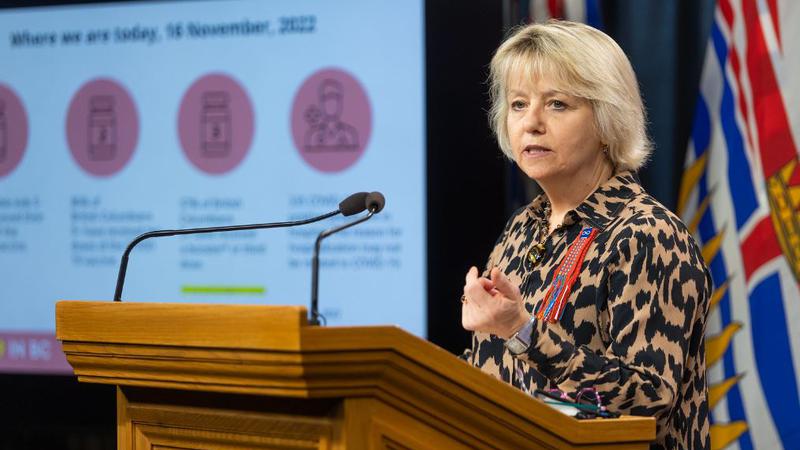
Henry delivered the message on Nov. 16 during a respiratory illness update, where she provided data that showed 86 per cent of British Columbians over the age of five have received a COVID-19 shot, putting the province in a much different situation than it was in at the same time the previous year.
When there were no COVID vaccines available for children and the health care system was still feeling the pressure of high levels of hospitalizations linked to COVID-19, Henry said the mask mandate was beneficial in playing a part in reducing community transmission.
“We are in a very different situation now; we have a very high level of immunity against COVID, we have both immunity through vaccinations for influenza and treatments, we have treatments for influenza, we have treatments for COVID and we have have treatments for RSV (respirator syncytial virus),” Henry said.
She noted schools throughout B.C. have had their ventilation systems improved and that absenteeism at every school is being monitored to ensure an outbreak is caught early. Additionally, masks are available and acceptable to wear in schools, and though she did recommend people wear masks, she did not order their use in school settings.
B.C.’s health minister said 1.2 million people have received their flu shot this year, already twice as many as last year.
Adrian Dix told the conference as influenza cases rise, more hospital beds will be opened, but the situation isn’t as desperate as in other provinces.
Testing of respiratory illnesses in the first two weeks of November show COVID-19 figures are on the decline.
The testing results also show that enterovirus and rhinovirus (common cold viruses) were making up the majority of illnesses, but influenza cases were on a sharp rise.
There has also been an uptick of RSV, though not as big of a spike as the influenza cases.
Henry noted there are cohorts of children who have not been exposed to these viruses in the past two years under the COVID-19 restrictions and will not have natural immunity to the viruses, particularly with RSV which has led to increased hospitalizations in other provinces, especially Ontario.
“We’re not seeing the same picture yet here in B.C., though we are continuing to watch,” Henry said. “We did have quite a lot of RSV circulating last fall, and we’re starting to see it increase now.”
In an effort to reduce the spread of all these viruses and protect the health care system from increased admissions, Henry urged people take precautions to protect themselves and others this winter.
“It’s not possible now to tell if you have symptoms of COVID, influenza, enterovirus or RSV [without testing]. They all cause very similar types of illness in most people across the board, but the actions we take to prevent the transmission, and to look after ourselves, are the same,” Henry said.
“One of the things we’ve had in place for a long time is saying ‘if you have COVID, you need to stay home for five days.’ That’s no longer relevant in the setting that we are in now. Instead if you have symptoms of any respiratory illness, the guidance is to stay home, and to limit close contact with others until you no longer have a fever and you’re well enough to participate in your usual daily activities.”
As influenza is the most prominent illness on an upward trend right now, Henry reminded people that it is a vaccination-preventable disease and encourages people to book a flu shot. There is also a nasal spray influenza vaccine available for children in B.C., and an enhanced flu vaccine for seniors.
She and Dix also encourage people who haven’t already to get vaccinated against COVID-19. There is the option for getting a flu and COVID shot at the same time.